Home – Blog Post
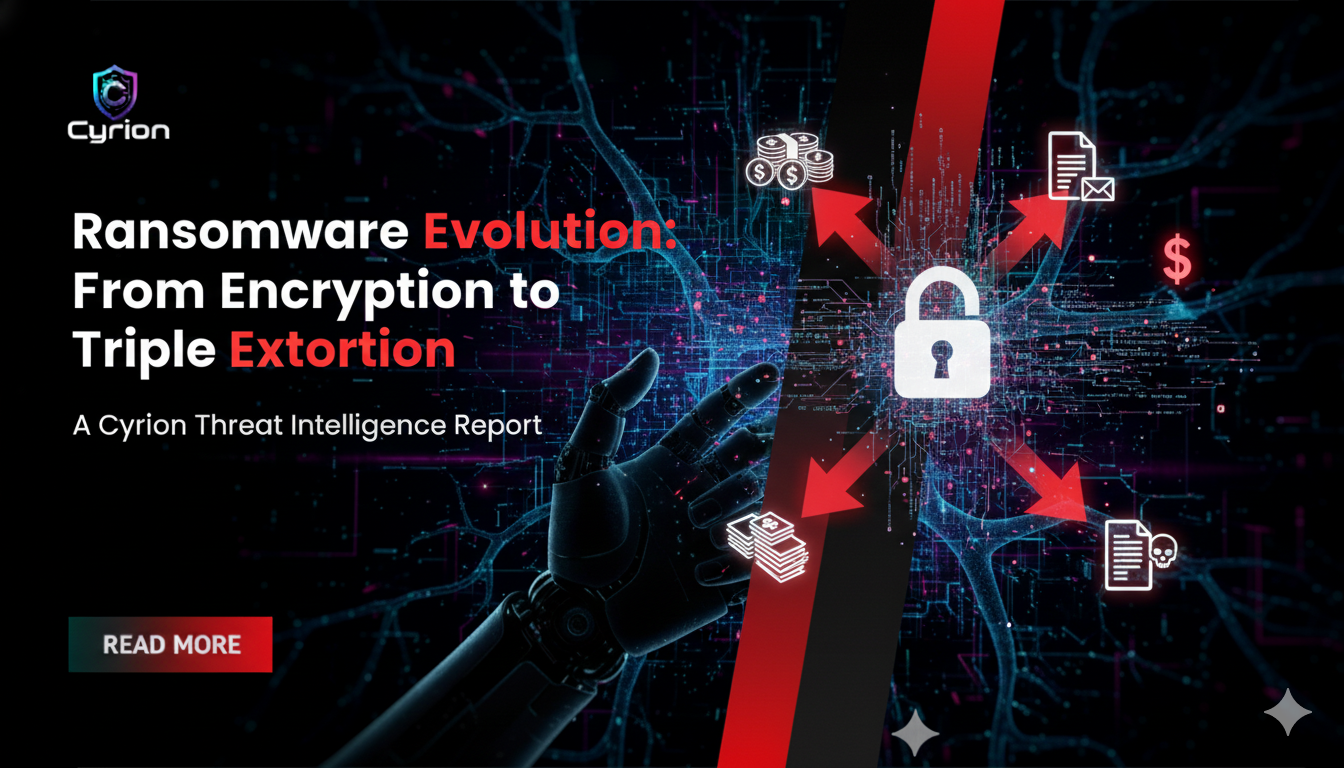
The ransomware landscape has undergone a dramatic transformation. What began as simple file encryption schemes has evolved into sophisticated, multi-layered extortion operations that can cripple entire organizations. In 2024, ransomware accounted for 44% of incident response cases, with a median ransom demand of $600,000. But the real danger isn’t just the ransom—it’s the cascading consequences that follow when attackers deploy their full arsenal of extortion tactics.
Remember the early days of ransomware? Attackers would encrypt your files, demand payment (often a few hundred dollars in Bitcoin), and if you had decent backups, you could simply restore your systems and move on. Those days are ancient history.
The first triple extortion ransomware attack occurred in October 2020, targeting Vastaamo, a Finnish psychotherapy clinic. After encrypting the clinic’s data, the attackers didn’t just demand payment from the organization—they contacted individual patients directly, threatening to expose their private therapy session information unless they paid personal ransoms. This watershed moment demonstrated a chilling truth: ransomware operators had found a way to multiply their leverage exponentially.
The statistics paint a sobering picture of how quickly this evolution occurred. The number of ransomware breaches increased by 518% between 2020 and 2021, while the average ransom demand skyrocketed from $847,000 in 2020 to $50 million in 2021. By 2024, the average ransomware demand had ballooned to $5.2 million, despite major law enforcement operations against ransomware groups.
Today’s ransomware attacks operate on multiple fronts simultaneously, each layer designed to increase pressure on victims and maximize payouts:
Layer One: Traditional Encryption
This is where it all begins. Attackers infiltrate your network—usually through phishing emails, exploiting unpatched vulnerabilities, or compromising remote access points—then move laterally through your systems, identifying critical data and infrastructure. Once positioned, they deploy ransomware that encrypts essential files and systems, bringing operations to a halt.
The encryption itself is often just the opening gambit. Organizations with robust backup strategies might think they can simply restore and recover, but modern attackers plan for this scenario.
Layer Two: Data Exfiltration and Publication Threats
This is where double extortion enters the picture. Before triggering the encryption, attackers exfiltrate copies of your sensitive data—customer information, financial records, intellectual property, employee data, proprietary business secrets. Arctic Wolf found that in 96% of ransomware incident response cases, attackers also exfiltrated data to apply pressure and extort payment.
The threat is simple but devastating: pay the ransom, or we’ll publish everything on the dark web. Even if you have perfect backups and can restore operations within hours, you’re still facing potential regulatory fines, massive reputational damage, and the exposure of your most sensitive information. According to Verizon’s 2024 Data Breach Investigations Report, ransomware and data extortion accounted for 32% of reported attacks, while Sophos reported that ransomware affected 59% of organizations in 2024.
This second layer effectively neutralizes the backup defense strategy that organizations had relied upon. You can restore your systems, but you can’t un-steal your data.
Layer Three: Extended Extortion Tactics
Triple extortion takes the attack even further by adding additional pressure points. These third-layer tactics vary but typically include:
Targeting Third Parties: Attackers contact the victim’s clients, partners, suppliers, or even individual customers whose data was compromised, demanding additional ransoms to prevent their information from being released. Imagine explaining to your customers that not only was your company breached, but now hackers are personally contacting them demanding payment.
DDoS Attacks: Threat actors threaten to launch or continue distributed denial of service attacks unless ransoms are paid, compounding operational disruptions. Even if you’re in the process of recovering from the ransomware, a sustained DDoS attack can keep your online services offline, multiplying revenue losses and customer frustration.
Regulatory and Media Pressure: Some ransomware groups contact regulators and media outlets directly, ensuring maximum publicity for the breach. This accelerates reputational damage and increases pressure on executives to pay quickly to contain the situation.
Attacking Connected Organizations: Sophisticated attackers may threaten or actually attack organizations in your supply chain or business ecosystem, creating a cascade of victims that all trace back to your initial compromise.
The consequences of these evolved ransomware attacks extend far beyond the immediate ransom payment:
A 2024 CISA report revealed that ransomware incidents surged 30% globally, with 60% involving double extortion tactics. A leading U.S. healthcare provider fell victim to a triple extortion scheme where attackers encrypted patient records, exfiltrated the data, and launched DDoS attacks until the ransom was paid, resulting in financial losses and severe reputational damage.
In February 2024, the BlackCat/ALPHV ransomware group launched a massive attack on Change Healthcare, a division of UnitedHealth Group, affecting over 100 million people. The attack disrupted healthcare services across the country, demonstrating how ransomware can have life-threatening implications when it targets critical infrastructure.
In summer 2024, a Russian ransomware gang attacked a UK pathology services provider, exfiltrating data from more than 300 million patient interactions with the National Health Service. When the victim refused to pay, the group released all stolen data on the dark web.
The British Library’s experience illustrates the true cost of these attacks. After being hit by the Rhysida ransomware group, the Library refused to pay the ransom. However, modernization efforts to recover from the attack were expected to run until July 2025, with costs nearly ten times the original ransom demand. While their principled stand sent a message, the exfiltrated data was eventually auctioned off and released for free on the dark web anyway.
The direct ransom payment is often the smallest component of the total cost:
Financial Devastation: The average ransomware incident costs $1.5 million in ransom payments, downtime, and recovery expenses. Small and medium-sized businesses often cannot afford to recover at all. Marks and Spencer suffered an attack by the DragonForce group in 2024, leading to estimated losses of £300 million and prolonged online service disruptions.
Regulatory Penalties: Data breaches caused by ransomware trigger GDPR, HIPAA, or CCPA violations, potentially resulting in millions in additional fines. Organizations face the nightmare scenario of paying ransoms to criminals while simultaneously paying penalties to regulators.
Reputational Destruction: 72% of consumers say they would reconsider their relationship with a company after a data breach. Trust takes years to build but can be destroyed in a single incident. Customers, partners, and investors all reconsider their relationships with compromised organizations.
Operational Paralysis: When ransomware hits healthcare providers, manufacturers, or financial institutions, it doesn’t just stop computers—it halts patient care, disrupts supply chains, and freezes financial transactions. The ripple effects extend far beyond the initial victim.
The professionalization of ransomware has accelerated these attacks. The Ransomware-as-a-Service (RaaS) model gained significant traction in 2024, enabling even low-skilled cybercriminals to launch sophisticated attacks. Groups like LockBit, BlackCat, Play, and RansomHub operate like legitimate businesses, providing affiliates with ready-to-use tools, technical support, user manuals, and even marketing strategies in exchange for a share of profits.
As of May 2025, the FBI was aware of approximately 900 entities affected by Play ransomware actors alone. LockBit accounted for $91 million in ransomware payments in 2025, making it the most prolific group that year.
This industrialization means that attackers can specialize: some focus on gaining initial network access, others on developing evasion techniques, and still others on the actual extortion process. This specialization makes the entire ecosystem more efficient and more dangerous.
Many organizations still rely on outdated defense strategies that were designed for simpler threats:
Backup and Restore Alone Isn’t Enough: While backups remain essential, they only address the first layer of extortion. Even if you can restore your systems perfectly, you still face data publication threats, regulatory violations, and reputational damage.
Perimeter Security Is Insufficient: Ransomware groups increasingly use legitimate system tools and administrative utilities in “living-off-the-land” approaches that bypass traditional security controls. Attackers also deploy vulnerable legitimate drivers through “bring your own vulnerable driver” (BYOVD) techniques to disable security products and gain kernel-level access.
Single-Point Solutions Miss the Bigger Picture: Ransomware is a multi-stage attack requiring defense-in-depth strategies. Stopping it requires addressing every phase: initial access prevention, lateral movement detection, data exfiltration monitoring, and rapid incident response.
Protecting against modern ransomware requires a layered strategy that addresses all phases of an attack:
Prevention Fundamentals
Start with the basics but execute them flawlessly. Prioritize remediating known exploited vulnerabilities, enable multi-factor authentication for all services (particularly webmail, VPN, and critical system accounts), and regularly patch software and applications to their latest versions. These fundamentals prevent the majority of initial access attempts.
Network Segmentation
Limit lateral movement by segmenting your network. Critical systems should be isolated from general user environments. If attackers gain initial access, segmentation prevents them from quickly reaching your most valuable assets.
Advanced Threat Detection
Deploy endpoint detection and response (EDR) solutions that can identify suspicious behaviors—unusual file access patterns, unauthorized encryption attempts, data staging for exfiltration. Modern solutions use behavioral analysis to detect attacks that traditional signature-based tools miss.
Data Loss Prevention
Monitor and control data exfiltration. Implement systems that detect large data transfers, unusual outbound traffic patterns, or access to sensitive information outside normal business patterns. Catching exfiltration attempts before they complete can limit the effectiveness of double extortion threats.
Privileged Access Management
Implement strict controls over privileged accounts. Use just-in-time access principles, require approval workflows for high-risk operations, and continuously monitor privileged account activity. Many ransomware attacks succeed by compromising or misusing privileged credentials.
Incident Response Planning
Hope for the best, but plan for the worst. Your incident response plan should address:
Organizations should conduct data backups not only to help resume operations if an attack occurs, but also to provide visibility to incident response teams. Test your backups regularly and ensure they’re isolated from production systems so attackers can’t encrypt them.
Security Monitoring and Operations
Roughly 27% of smaller UK firms expect to face cyber extortion over the next two years, yet 43% have no disaster-recovery plans. This gap between risk awareness and preparedness is dangerous. Organizations need continuous security monitoring—either through internal Security Operations Centers (SOCs) or managed security service providers—to detect and respond to threats before they escalate into full-blown ransomware incidents.
The complexity of modern ransomware attacks means that organizations cannot simply deploy technology and hope for the best. You need expertise in:
Most importantly, you need this expertise available before an incident occurs. Scrambling to find help after ransomware has encrypted your systems and stolen your data is far more expensive and far less effective than proactive preparation.
At Cyrion, we understand that defending against triple extortion ransomware requires comprehensive strategies that address every attack phase. Our ransomware defense services include:
Ransomware Readiness Assessments: We evaluate your current security posture against modern ransomware tactics, identifying vulnerabilities in your defenses before attackers do. Our assessments examine technical controls, detection capabilities, backup strategies, and incident response preparedness.
Defense-in-Depth Implementation: We help you implement layered security controls including network segmentation, endpoint protection, data loss prevention, and privileged access management. Our solutions are tailored to your environment and risk profile.
24/7 Threat Monitoring: Our Security Operations Center continuously monitors for ransomware indicators including unusual file access patterns, lateral movement attempts, data staging activities, and known ransomware behaviors. Early detection is critical—we identify and contain threats before encryption begins.
Incident Response Planning and Testing: We develop comprehensive incident response plans specific to ransomware scenarios, then conduct tabletop exercises and simulations to ensure your team knows exactly what to do when seconds count. We help you answer critical questions: Who has decision-making authority? How do you isolate infected systems? When do you notify regulators and customers?
Data Protection and Backup Strategies: We implement and validate backup solutions that protect against ransomware encryption, ensuring your data remains accessible even during an attack. Our solutions include immutable backups, offline storage, and regular restoration testing.
Continuous Security Improvement: The ransomware landscape evolves constantly. We provide ongoing threat intelligence, security assessments, and defense optimization to ensure your protections keep pace with emerging threats.
Expert Incident Response: If the worst happens and you face a ransomware attack, our experienced incident response team is available 24/7 to help contain the damage, investigate the attack, and guide recovery. We work with leading forensics partners and maintain relationships with law enforcement to support victims through the entire incident lifecycle.
Don’t wait until ransomware shuts down your operations and threatens your data. The time to prepare is now, before you become another statistic in the growing wave of successful ransomware attacks.
Protect your organization from triple extortion ransomware. Visit cyrion.io to schedule a ransomware readiness assessment and learn how we can help you build comprehensive defenses against modern ransomware threats.
Understanding the threat is the first step toward protection. Subscribe to our newsletter for monthly insights on emerging cybersecurity threats and proven defense strategies.
Get monthly updates on emerging threats, best practices, and strategic security insights for your business.
Copyright 2025 © Cyrion.io
We use cookies to improve your experience on our site. By using our site, you consent to cookies.
Websites store cookies to enhance functionality and personalize your experience. You can manage your preferences, but blocking some cookies may impact site performance and services.
Essential cookies enable basic functions and are necessary for the proper function of the website.