Home – Blog Post
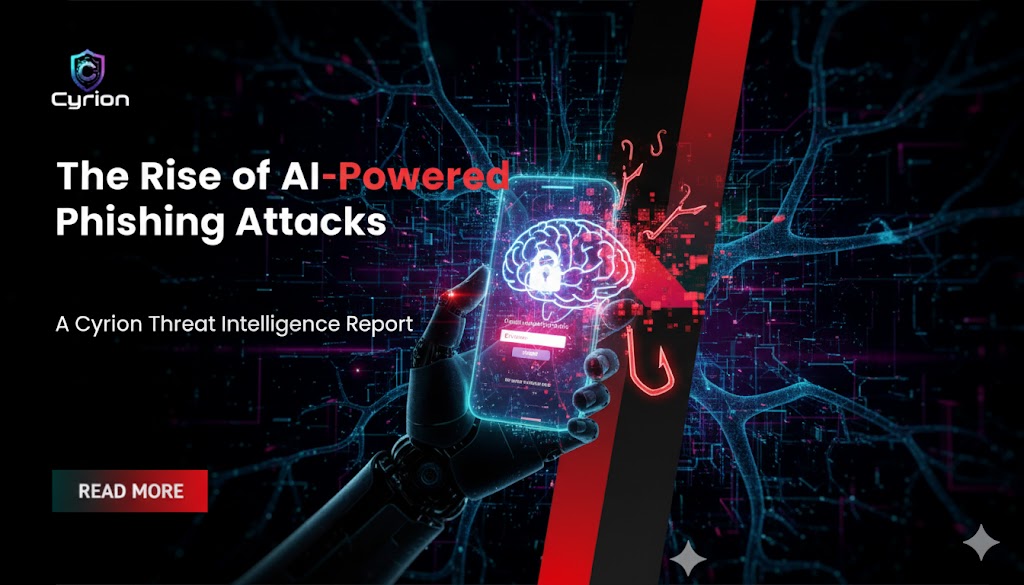
Remember when you could spot a phishing email by its poor grammar and obvious spelling mistakes? Those days are over. Artificial intelligence has fundamentally changed the phishing landscape, and the results are alarming: research shows that 67.4% of all phishing attacks in 2024 utilized some form of AI, and in early 2025, AI-generated phishing campaigns began outperforming even elite human cybercriminals.
Traditional phishing attacks were relatively easy to identify. A suspicious email claiming to be from your bank would often contain telltale signs: awkward phrasing, grammatical errors, or generic greetings like “Dear Customer.” Security awareness training taught employees to look for these red flags, and they worked—for a while.
But artificial intelligence has eliminated these warning signs entirely. Modern phishing emails are grammatically flawless, contextually appropriate, and disturbingly personalized. According to research from Hoxhunt, AI phishing agents improved their effectiveness by 55% between 2023 and 2025. By March 2025, these AI systems were crafting attacks that were 24% more effective than those created by experienced human red teams.
The shift happened remarkably fast. In November 2024, AI-generated phishing was still 10% less effective than human-crafted attacks. Just four months later, it had surpassed human capability across all skill levels of potential victims.
AI doesn’t just improve the quality of phishing emails—it transforms every aspect of the attack:
Hyper-Personalization at Scale: AI systems scrape publicly available data from LinkedIn, social media, corporate websites, and even previous data breaches to build detailed profiles of targets. The result? Emails that reference your actual projects, use your company’s internal terminology, and arrive at contextually appropriate times. One finance employee at a multinational firm was fooled by an AI-generated video call featuring deepfake versions of senior colleagues, resulting in a $25 million transfer to attackers.
Polymorphic Campaigns: Perhaps the most dangerous innovation is polymorphic phishing, where AI continuously mutates email content in real-time. SecurityWeek reports that 76% of all phishing attacks in 2024 featured at least one polymorphic component. Each email in a campaign is subtly different—varying subject lines, sender names, and message content—making it virtually impossible for traditional signature-based detection systems to identify patterns.
Voice and Video Deepfakes: AI isn’t limited to email anymore. Voice cloning technology has become frighteningly convincing, with studies showing that people can correctly identify AI-generated voices only 60% of the time. Thirty percent of organizations reported falling victim to AI-enhanced voice scams in 2024. Attackers impersonate executives during phone calls, often combining spoofed caller IDs with cloned voices to extract credentials or authorize fraudulent transactions.
Continuous Adaptation: Modern AI phishing systems use real-time analysis to adapt their approach. If a victim clicks a link but doesn’t enter credentials, the AI might send a follow-up message with adjusted urgency or different social engineering tactics. This dynamic behavior makes these attacks far more persistent and successful than traditional static campaigns.
The statistics paint a clear picture of how widespread and effective these attacks have become:
Legacy email security systems rely heavily on pattern recognition, signature detection, and reputation scoring. These methods were effective against mass, low-quality phishing campaigns. But AI-powered attacks bypass these defenses with ease:
Traditional security training is also losing effectiveness. When phishing emails contained obvious mistakes, teaching users to spot them worked. But when AI generates messages indistinguishable from legitimate communication, the human factor becomes the weakest link.
Protecting against AI-powered phishing requires a comprehensive, multi-layered approach that goes beyond traditional email filtering:
Advanced Email Authentication: Implementing and properly configuring SPF, DKIM, and DMARC protocols is essential. These technical controls prevent domain spoofing and make it harder for attackers to impersonate your organization or trusted partners.
AI-Powered Detection: Fight fire with fire. Modern security platforms use machine learning to analyze email behavior, sender patterns, and linguistic anomalies that might indicate AI-generated content. Natural language processing tools can detect subtle inconsistencies in tone or unusual sender behavior that humans might miss.
Behavioral Analysis: Rather than just analyzing email content, advanced systems monitor user behavior patterns. Does this email request match typical communication patterns? Is the sender displaying unusual behavioral characteristics? These behavioral signals often reveal attacks that content analysis alone might miss.
Zero Trust Architecture: Assume every request is potentially malicious, especially those involving sensitive data or financial transactions. Implement multi-factor authentication for all critical systems, require verification through separate channels for unusual requests, and enforce principle of least privilege access controls.
Continuous Security Awareness: Traditional annual training is no longer sufficient. Organizations need ongoing, behavior-based training that uses real-world examples of current attacks. Simulated phishing exercises should include AI-generated content to prepare employees for what they’ll actually encounter. Research shows that behavior-based training provides significantly better protection than compliance-focused programs.
Human Verification for High-Risk Actions: Establish out-of-band verification procedures for sensitive operations. If you receive an email requesting a wire transfer or credential sharing, verify through a different communication channel—call the person at a known number, use a separate messaging system, or confirm in person.
AI-powered phishing isn’t slowing down—it’s accelerating. Security researchers expect several emerging trends:
By 2027, experts predict that traditional methods of grouping attacks into campaigns will become largely irrelevant, as each attack becomes uniquely tailored and continuously evolving.
At Cyrion, we understand that defending against AI-powered phishing requires expertise, advanced tools, and constant vigilance. Our comprehensive phishing defense services combine:
Don’t wait until your organization becomes a statistic. The sophistication of AI-powered phishing means that traditional defenses are no longer enough. You need a security partner who understands both the technology behind these attacks and the human factors that make them successful.
Protect your organization from the next generation of phishing threats. Visit cyrion.io to schedule a comprehensive phishing defense assessment and learn how we can help you stay ahead of AI-powered attackers.
The threat landscape is evolving faster than ever. Subscribe to our newsletter for monthly insights on emerging cybersecurity threats and practical defense strategies.
Get monthly updates on emerging threats, best practices, and strategic security insights for your business.
Copyright 2025 © Cyrion.io
We use cookies to improve your experience on our site. By using our site, you consent to cookies.
Websites store cookies to enhance functionality and personalize your experience. You can manage your preferences, but blocking some cookies may impact site performance and services.
Essential cookies enable basic functions and are necessary for the proper function of the website.